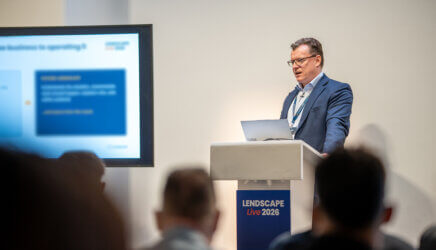
When Simply Asset Finance’s Andy Trimmer and Alexandra McWilliams joined our CPO Steve Taplin for a webinar on deploying AI inside a regulated lending business, they didn’t come with a highlight reel, they shared the actual mechanics: the technical groundwork involved, the internal impact… and the mascot.
Yes, mascot. Simply’s AI assistant, Kara, exists as more than software. She’s also a plushy that sits in every one of Simply’s UK offices, and as Andy and Alex made clear, that’s not a marketing gimmick. It’s core to how they got their people on board.
The technical foundation came first, and it took years
Andy Trimmer, Simply’s Director of Technology, was clear that Kara wasn’t the result of chasing a model. It was built on eight years of groundwork.
“Having good data structures, having clean data, constantly assessing your own data, having a strategy around your data are all really, really, really important,” he said. “It’s not a new problem that AI has injected into the situation, but it’s still just garbage in, garbage out.” — Andy Trimmer
Three technical decisions were critical, in his telling.
- Data is key: it shouldn’t be single use and never looked at again. Data captured once, quality assessed, stored well, and mapped clearly can be reused indefinitely to spot trends, train models, and inform decisions well beyond its original purpose.
- A modular, API-first architecture. Simply’s systems talk to each other through a shared data layer, giving them one version of the truth rather than dozens of disconnected sources.
- Letting each system be the best version of itself. Rather than stretching one platform to do everything, Simply resisted the temptation to bolt new capabilities onto systems that weren’t built for them, a discipline Andy credits with letting them adopt new AI features as they emerged, instead of fighting their own infrastructure.
None of it had to be finished before they started. As Andy put it: “If you’re waiting for tomorrow to start putting those things in place, then it’s too late. It’s always start today.”
The brand decision was as important as the tech
Alexandra McWilliams, Simply’s Head of Brand and Communications, led the people side of Kara’s rollout. Her explanation for why it worked was straightforward: they treated it as a brand exercise, not a software launch.
Kara wasn’t introduced as a chatbot or a feature. She was introduced as a new member of the team, with a defined personality, tone of voice, and even hobbies (rewatching TV shows, matcha). A group of subject-matter experts across the business acted as her “mentors,” shaping what she was, and explicitly, what she wasn’t.
That distinction gave the comms team something concrete to communicate, and it gave employees something to trust. “We wanted to make sure that even though Kara was a new concept, she’d actually been around for quite a long time,” Alexandra said, pointing out that many of the automations Kara now represents were already running quietly in the background.
The moment it clicked for Andy was watching teams pull Kara into their own problem-solving sessions unprompted. “People started talking about her within the room,” he said. “This is our problem. Sit Kara at the end of the table, and let’s work out how we can train that plushie to make this possible.”
Trust is built the same way it always has been
Asked how they got both staff and customers comfortable with an AI assistant handling real work, Andy and Alexandra both talked about culture rather than technical safeguards.
“The basis is always trust,” Andy said. “How we work with our customers is based on trust, and we build that over time. The proof is always in the pudding.” Every action Kara takes is audited and explainable, but the harder work, he said, was making sure people stayed in the loop by choice: “It has to be iterative. It has to be over time. And you can’t take the human out of the loop.”
Alexandra’s advice to anyone starting this journey: don’t underestimate the emotional side of the rollout. “Don’t overlook the people who are going to be living it every day and working with it every day, and how they might feel.”
Late in the session, Andy offered the piece of advice that’s since become the unofficial tagline for the whole project:
“Put up guardrails, not bricks.”
His point was that teams who feel boxed out of AI initiatives will find ways to work around them. Teams who are given clear boundaries — and room to bring their own ideas — will bring the best ones forward. Some of Simply’s most valuable AI use cases, he said, came from employees who simply saw an opportunity and asked to try it.
If you’re starting an AI build from scratch, start here
Strip away the plushy, and the underlying lesson holds for any lending business: achieving clean data, connected systems, and infrastructure that lets AI act on live information must come before the AI part gets interesting. This foundational work is what separates a real deployment from a pilot that stalls.
Simply Asset Finance built that foundation on Lendscape’s platform, connected via API to their other systems rather than sitting alongside them as another disconnected source of data. It’s a useful example of what’s possible for any asset finance provider willing to do the groundwork first.